Julianne Moore Explores Identity and Ambition in The Debut
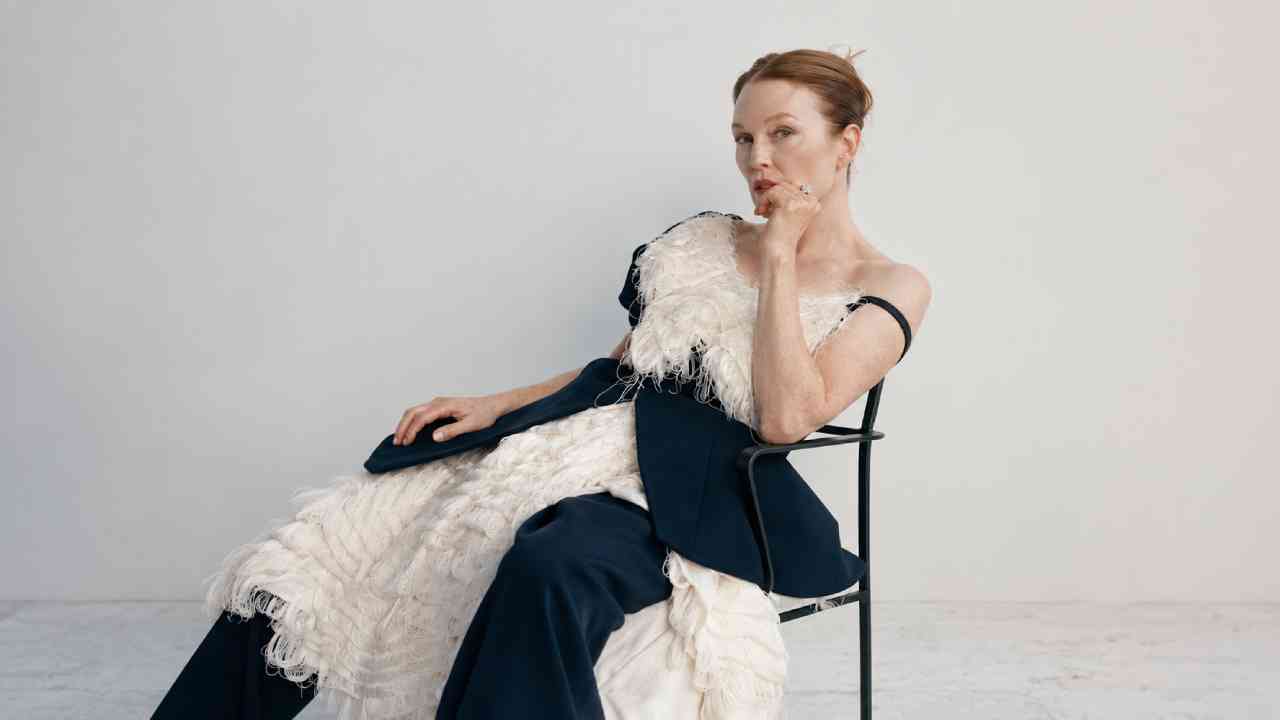
Petite Paulina – After four decades on screen, Julianne Moore continues to find fascinating stories inside seemingly ordinary lives. Her latest role in The Debut brings that strength into sharp focus. She plays Mona Friedman, a suburban New Jersey housewife living during the 1990s. From the outside, Mona’s world appears stable and familiar. However, beneath that routine sits a woman searching for something she cannot easily define. Her family depends on what she provides at home, yet she increasingly wants an identity beyond those responsibilities. That quiet dissatisfaction eventually pushes Mona toward a local theater production. What begins as a simple audition gradually becomes something much more personal. For Moore, this type of character feels especially fitting. She has built much of her career around women whose inner lives are richer, stranger, and more complicated than their surroundings initially suggest. The Debut gives her another opportunity to explore that emotional territory.
Read Also: Milan Fashion Week Spring 2027 Street Style Blends Elegance and Casual Fashion
The Debut Turns an Audition Into a Search for Freedom
Mona does not enter the theater world as a confident performer chasing fame. Instead, she arrives searching for possibility. The local production introduces her to people who treat performance with intense seriousness. Their enthusiasm offers something her domestic routine has stopped providing: recognition. Suddenly, Mona can imagine herself becoming someone beyond the role she has played at home for years. However, freedom quickly becomes more complicated. The theater community has its own expectations, hierarchies, and pressures. Mona becomes increasingly fascinated by ideas about artistic authenticity and great performance. As a result, her attempt to escape one restrictive identity risks trapping her inside another. That tension gives The Debut an intriguing emotional foundation. Julianne Moore does not need Mona to become a conventional hero. Instead, she can explore how ambition changes someone who has spent years feeling overlooked. The transformation is exciting, uncomfortable, and intentionally imperfect.
Ambition Slowly Changes Mona Friedman
Ambition often looks inspiring from a distance. Yet The Debut appears interested in what happens when ambition begins reshaping someone’s behavior. Mona initially seems hesitant and uncertain. Then, theater gives her a place where transformation feels possible. She becomes increasingly determined to prove herself as a performer. That desire eventually pushes her toward choices that can appear strange, selfish, or excessive. Still, Julianne Moore approaches Mona as more than a collection of bad decisions. The character is experiencing the intoxicating feeling of finally being noticed. Therefore, her growing obsession carries an emotional logic even when her behavior becomes difficult to defend. This distinction makes Mona more interesting. She is neither simply liberated nor completely consumed by ambition. Instead, she moves somewhere between those extremes. That ambiguity reflects real life, where personal reinvention rarely follows a clean path. Sometimes discovering a new version of yourself also reveals qualities you never expected to find.
Behavior and Identity Become Central to the Story
One of Julianne Moore’s most interesting ideas about acting is the distinction between behavior and character. A person can change their clothes, voice, posture, or social habits without fundamentally becoming someone else. That observation feels especially relevant to Mona. Theater gives her new behaviors and a new environment, yet the deeper question concerns what those changes reveal about her identity. Is Mona becoming someone different, or is she finally exposing parts of herself that were always present? That uncertainty creates room for a richer performance. Moore has long shown an ability to portray characters without reducing them to simple labels. Her women can be sympathetic and frustrating within the same scene. Likewise, Mona can crave freedom while becoming increasingly consumed by the approval of others. Instead of treating these contradictions as problems, Moore uses them to make the character feel human. After all, people rarely behave consistently enough to fit neatly inside one definition.
Jesse Eisenberg Creates an Unusual World Around Mona
The Debut marks Jesse Eisenberg’s third feature as a writer and director, and it reunites him with Julianne Moore after their previous collaboration. This time, he places her inside an unusual theatrical environment filled with enthusiasm, insecurity, ambition, and awkwardness. The film even includes a play within the story, with music and lyrics created by Eisenberg. Meanwhile, Paul Giamatti plays Jerry, the theater director whose influence becomes increasingly important to Mona. Jerry represents more than a demanding creative leader. His approval carries enormous weight among the actors surrounding him. Consequently, Mona enters a community where artistic validation can feel almost addictive. The setting creates opportunities for comedy, but it also provides a sharp way to examine belonging. Anyone who has entered a passionate creative community may recognize that mixture of excitement and self-consciousness. For Mona, however, the experience arrives when she is particularly vulnerable to the promise of reinvention.
Read Also: Pandora Teams Up With Pat McGrath for a Glamorous Jewelry Collection
Ordinary Lives Can Carry Extraordinary Emotional Stakes
Many dramas rely on crimes, disasters, or enormous external conflicts to create tension. Julianne Moore, however, has repeatedly found emotional intensity inside ordinary circumstances. Her filmography includes mothers, wives, artists, teachers, and other characters facing deeply personal struggles. Their worlds may appear normal, yet their emotional stakes can feel enormous. The Debut continues that tradition. Mona does not need to save the world. She is trying to understand whether the life she built still contains enough room for herself. That question can be quietly devastating. Moreover, it feels recognizable because many people eventually reconsider roles they once accepted without question. Careers change. Families evolve. Relationships shift. Personal ambitions return after years of silence. Therefore, Mona’s story can reach beyond theater itself. The stage becomes a place where larger questions about identity and purpose emerge. Sometimes the smallest environments create the biggest emotional battles because the consequences feel intensely personal.
Four Decades of Acting Give Moore a Rare Perspective
At 65, Julianne Moore has spent roughly four decades building one of the most varied careers in contemporary cinema. Her work stretches from intimate dramas to major studio productions. Yet a consistent quality runs through many of those performances: curiosity about people who resist simple explanations. That experience becomes particularly valuable with a character like Mona. Moore has played women dealing with domestic expectations before, but repetition does not mean duplication. Every character exists inside a different emotional world. A suburban housewife in one story can have entirely different desires, fears, and contradictions from another. Moore’s ability to recognize those differences helps explain her longevity. Instead of relying only on dramatic transformations, she often focuses on small gestures and emotional shifts. Furthermore, experience allows her to approach complicated characters without immediately judging them. That restraint can make performances feel more believable because audiences receive space to decide what they think about the character themselves.
Julianne Moore Continues Choosing Stories About Human Complexity
Even after decades of success, Julianne Moore appears drawn toward stories that examine the contradictions of ordinary people. The Debut fits naturally into that pattern. Mona wants freedom, yet she also wants approval. She seeks authenticity while becoming absorbed by performance. She wants to discover herself, although the process may cause her to behave in ways she never expected. Those tensions give the character emotional depth without requiring easy answers. Moore’s upcoming work also demonstrates her continuing interest in distinctive filmmakers and unusual worlds. She is set to appear in Tom Ford’s Cry to Heaven, an adaptation of Anne Rice’s novel set in 18th-century Venice. Still, The Debut offers something particularly intimate. Beneath the theater, humor, and escalating ambition sits a familiar human desire: the wish to feel that our lives still contain unexplored possibilities. Moore’s performance turns that desire into a story about what can happen when someone finally decides to pursue them.